


Is the 2026 Mitsubishi Outlander Sport or 2026 Nissan Kicks better for Altoona, PA commuters?
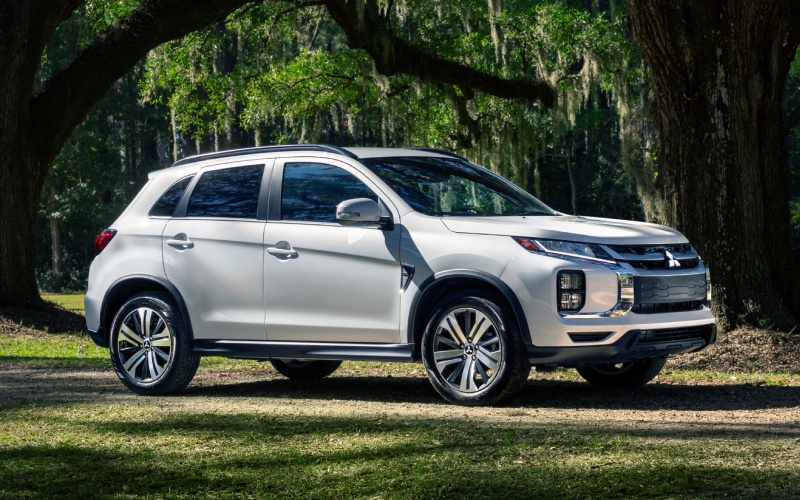
Colonial Mitsubishi – Is the 2026 Mitsubishi Outlander Sport or 2026 Nissan Kicks better for Altoona, PA commuters?
For commuters around Altoona, PA, the choice between the Mitsubishi Outlander Sport and Nissan Kicks often comes down to one practical question: which compact crossover feels more confident and useful in everyday driving? Both vehicles are sized well for parking, errands, and highway travel, and both offer five-passenger seating with modern connectivity. The Kicks brings a stylish urban personality, available Intelligent All-Wheel Drive, NissanConnect® 12.3″ touch-screen display, wireless Apple CarPlay® integration, and Safety Shield® 360. Those are attractive qualities for shoppers who want a city-friendly crossover with contemporary tech. However, the Mitsubishi Outlander Sport makes a stronger case for Pennsylvania drivers who prioritize standard traction, durable engineering, and a long-term ownership package that adds confidence beyond the initial test drive.
The biggest difference is that Mitsubishi makes All-Wheel Control (AWC) standard across the Outlander Sport lineup, while the Kicks offers all-wheel drive only on select configurations. That matters for commuters who do not want to think about whether the right drivetrain is included. Around Altoona, daily routes can include neighborhood streets, quick merges, hilly roads, and changing pavement conditions. Standard AWC gives the Outlander Sport a built-in advantage because traction support is part of the vehicle’s foundation rather than an upgrade decision. The Kicks is capable when equipped with Intelligent All-Wheel Drive, but the Mitsubishi approach is simpler: choose the Outlander Sport and drive away with all-wheel control already included.
Why standard All-Wheel Control matters for commuting
Commuting is not always about extreme conditions. Most drivers simply want a vehicle that feels settled and predictable during routine travel. The Outlander Sport’s All-Wheel Control (AWC) is designed to support balanced handling and stability, which helps the crossover feel composed in common situations such as pulling out onto a busy road, navigating uneven surfaces, or traveling across rolling terrain. Mitsubishi pairs that system with 8.5 inches of ground clearance, giving the Outlander Sport a slightly taller stance than the Kicks and reinforcing its confident, practical character.
The Outlander Sport also uses a standard suspension layout that includes a MacPherson strut front suspension with stabilizer bar and a multi-link rear suspension with stabilizer bar. That is an important detail because the Kicks uses a semi-independent torsion beam rear suspension on many trims, with an independent multi-link rear suspension found on the SR AWD model. For shoppers who compare specifications closely, Mitsubishi’s standard multi-link rear suspension is a clear advantage. It supports the Outlander Sport’s balanced feel and complements the standard AWC system in a way that makes the vehicle feel ready for more than basic city driving.
Powertrain comparison for daily drivers
Both crossovers use 2.0-liter 4-cylinder engines and continuously variable transmissions, but the Mitsubishi has the output edge. The Outlander Sport’s 2.0L MIVEC DOHC 16-valve Inline 4-cylinder engine produces 148 HP @ 6000 rpm and 145 lb-ft @ 4200 rpm. The Nissan Kicks produces 141 horsepower and 140 lb-ft of torque. While the numbers are close, the Mitsubishi advantage is meaningful for shoppers who want a compact SUV that feels responsive when carrying passengers, climbing grades, or merging onto faster roads.
The Outlander Sport also includes a Drive Mode Selector and ECO Indicator, giving the driver useful feedback and control during everyday operation. The Kicks is easy to drive and offers a smooth Xtronic Continuously Variable Transmission (CVT)®, but the Mitsubishi combines its powertrain with standard AWC in a way that feels more complete for commuting outside dense urban environments. For many shoppers, that combination is the deciding factor. It is not only about engine output or drivetrain alone; it is about how those systems work together during ordinary drives.
Interior technology and comfort
Technology matters on a commute, and both vehicles offer strong features. The Outlander Sport includes an 8.0″ Smartphone-Link Display Audio (SDA) system, Apple CarPlay® and Android Auto, Bluetooth® Wireless Technology, HD Radio®, SiriusXM® with 3-Month All Access Trial, a rearview camera, automatic climate control, cruise control, and steering wheel audio and phone controls. Select trims add helpful upgrades such as heated front seats, rear USB ports, a leather-wrapped steering wheel, and a leather-wrapped shift knob. The result is a cabin that feels straightforward, useful, and easy to live with.
The Nissan Kicks has its own technology strengths, including NissanConnect® 12.3″ touch-screen display, wireless Apple CarPlay® integration, available Bose Personal® Plus Audio System, and available Intelligent Around View® Monitor. Those features may appeal to shoppers who put display size and premium audio high on the priority list. Still, the Outlander Sport balances technology with everyday comfort and simplicity. Its controls are approachable, its seating layout is flexible, and its cargo area expands from 21.7 cu. ft. behind the second row to 49.5 cu. ft. behind the front seats. That makes it easy to handle work bags, groceries, sports gear, and weekend luggage without moving into a larger SUV.
Safety and ownership confidence
Safety features are a major part of the comparison. Mitsubishi equips the Outlander Sport with 7 Airbags, Active Stability Control (ASC), Advanced Dual-Stage Front Airbags, Anti-lock Braking System (ABS) with Electronic Brakeforce Distribution (EBD) and Brake Assist, Automatic High Beam (AHB), Forward Collision Mitigation (FCM) with Pedestrian Detection, Hill Start Assist (HSA), Lane Departure Warning (LDW), Rear Seat Alert, RISE Body Construction, and a Tire Pressure Monitoring System (TPMS). Select trims also include Blind Spot Warning (BSW) with Lane Change Assist (LCA) and Rear Cross Traffic Alert (RCTA). The Kicks offers Safety Shield® 360 and available ProPILOT Assist, so it is certainly not short on modern driver assistance.
Where Mitsubishi gains additional ground is ownership coverage. Mitsubishi Motors offers America’s Best-Backed Vehicles with a 10-Year/100,000-Mile Powertrain Limited Warranty, 2-Year/30,000-Mile Limited Maintenance, and 5 years of roadside assistance. Nissan lists a 5-year/60,000-mile powertrain warranty and 3-year/36,000-mile roadside assistance for the Kicks. For commuters who plan to keep a vehicle for years of daily use, that difference can be just as important as horsepower, cargo space, or infotainment. Confidence does not end when the drive starts; it continues throughout the ownership experience.
Key advantages for the Mitsubishi Outlander Sport
- Standard capability: All-Wheel Control (AWC) is included across the Outlander Sport lineup, while Kicks all-wheel drive is available only on select configurations.
- Stronger output: The Mitsubishi delivers 148 HP and 145 lb-ft of torque, compared with 141 horsepower and 140 lb-ft of torque in the Kicks.
- Suspension confidence: A multi-link rear suspension is standard on the Outlander Sport, while the Kicks reserves independent multi-link rear suspension for its AWD configuration.
- Ownership support: Mitsubishi’s powertrain warranty, limited maintenance, and roadside assistance coverage help support long-term peace of mind.
For shoppers comparing these two crossovers, the Kicks may stand out for screen size, available premium audio, and city-focused styling. The Outlander Sport, however, is the better fit for drivers who want the assurance of standard AWC, slightly stronger output, proven compact SUV utility, and a durable feature set that does not feel overly complicated. That balance is especially valuable for commuters who want one vehicle for weekday driving, errands, family responsibilities, and regional travel.
Frequently Asked Questions:
Is the Mitsubishi Outlander Sport better than the Nissan Kicks for commuting?
For many commuters, yes. The Outlander Sport has standard All-Wheel Control (AWC), more horsepower and torque than the Kicks, and a standard multi-link rear suspension. Those strengths make it especially appealing for drivers who want confidence and stability built into a compact crossover.
Does the Nissan Kicks offer all-wheel drive?
Yes, the Nissan Kicks offers available Intelligent All-Wheel Drive on select models. The difference is that the Outlander Sport includes All-Wheel Control (AWC) as standard equipment, which gives Mitsubishi an advantage for shoppers who do not want to move up the lineup to get added traction capability.
Which vehicle has better warranty coverage?
The Mitsubishi Outlander Sport has the advantage with Mitsubishi’s 10-Year/100,000-Mile Powertrain Limited Warranty, 2-Year/30,000-Mile Limited Maintenance, and 5 years of roadside assistance. That is stronger powertrain and roadside assistance coverage than the Kicks warranty information provided by Nissan.
If you are shopping for a compact crossover serving Johnstown, Greensburg, and Altoona, Colonial Mitsubishi is a smart place to focus your search. The Mitsubishi Outlander Sport gives daily drivers a well-rounded blend of capability, technology, safety, and ownership support. The Nissan Kicks is a modern and appealing alternative, but for shoppers who want a crossover that feels prepared from the start, the Outlander Sport is the stronger recommendation.
0 comment(s) so far on Is the 2026 Mitsubishi Outlander Sport or 2026 Nissan Kicks better for Altoona, PA commuters?